
In this blog, you’ll learn what care coordination really means, why it’s crucial for delivering better healthcare, and how Salesforce Health Cloud makes it easier. Care coordination is all about connecting the dots, ensuring doctors, specialists, nurses, and family members work together with the right patient information at the right time. With Health Cloud, you can manage care teams, share updates seamlessly, and keep patients healthier by avoiding gaps in communication. Let’s explore how this process works and why it’s a game-changer for healthcare providers.
What is Care Coordination?
- Care coordination means organizing patient care across multiple healthcare providers so everyone works together well.
- It’s about sharing the right patient information at the right time with the right people to provide the best care.
- For example, if a patient like James Brown sees different doctors for a kidney problem, all care providers get updated info to give consistent care.
- It helps keep patients healthier longer and prevents unnecessary tests or frustrated patients.
Why is Care Coordination Important?
- When doctors and providers don’t communicate effectively, treatments might conflict or become hard to manage.
- Coordinated care is important especially after emergency visits or for patients with multiple specialists.
- Everyone involved, doctors, specialists, nurses, and family, can stay informed and aligned on patient treatment.
How Does Health Cloud Help with Care Coordination?
- Health Cloud uses electronic health records (EHR) so all providers update and access patient info in one place.
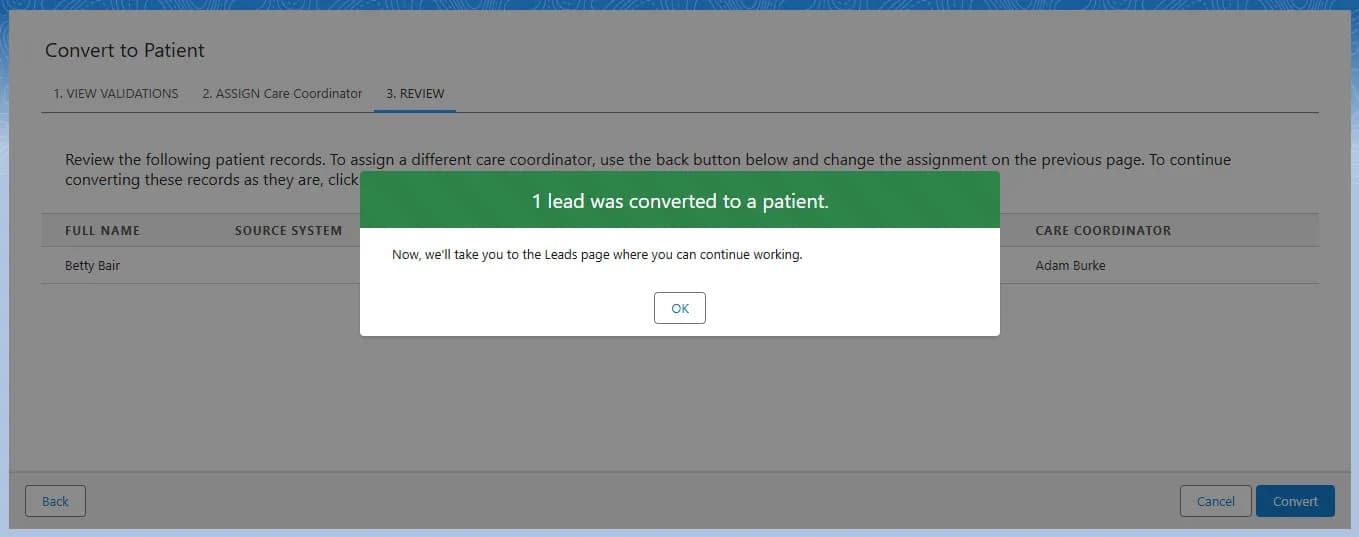
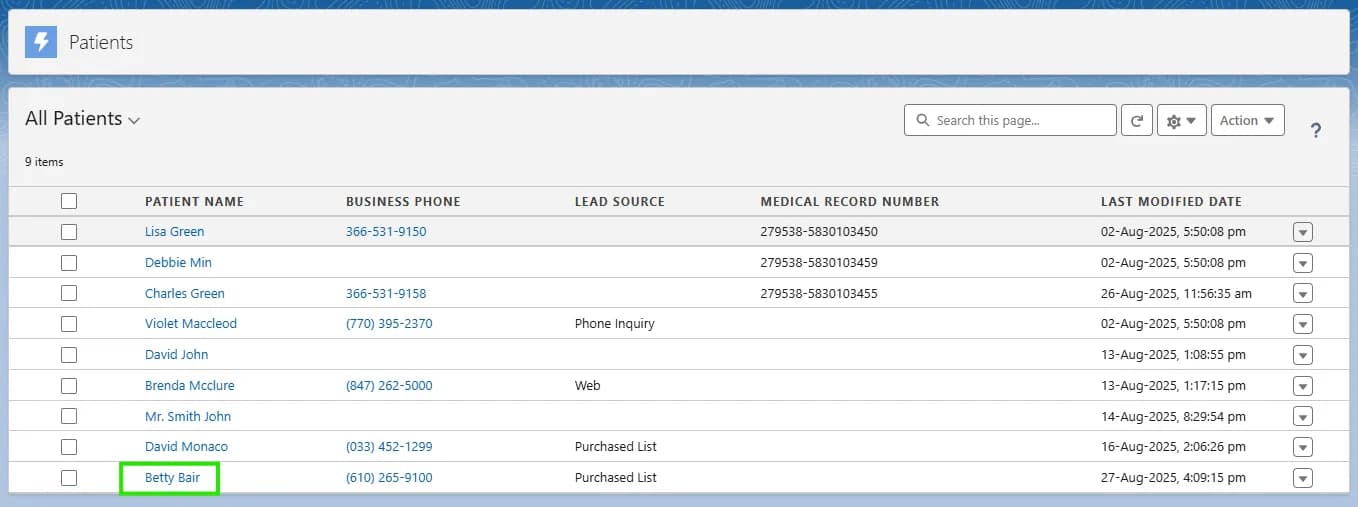
- You can onboard patients by converting leads into patient records in Salesforce.
- Patients get assigned a care provider or care team to manage their health plans.
- Care plans track patient conditions, treatments, and care team responsibilities.
Example Walkthrough in Health Cloud
- Start with a lead, then convert it to a patient (Select a lead record and convert this lead by clicking Convert to Patient button).